
Home blood glucose monitoring: a complete guide
Medically reviewed by Pharmacist Cherlyn
The short answer
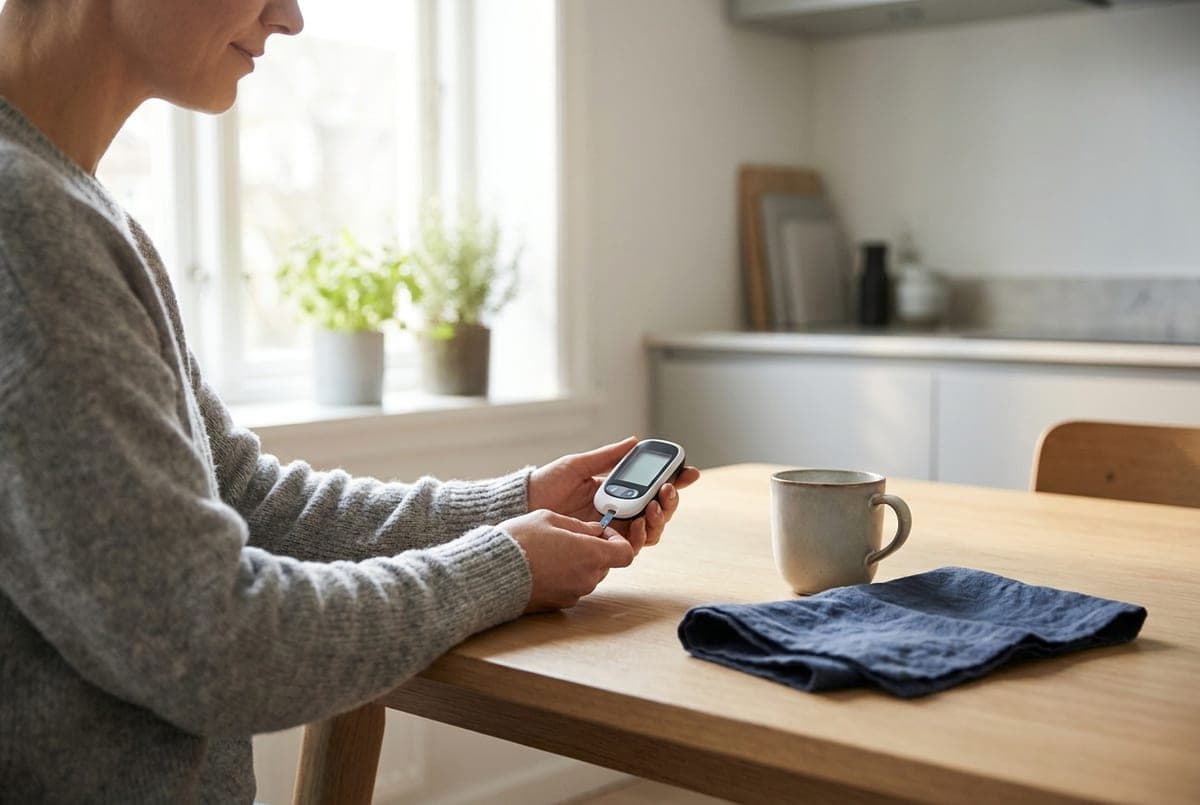
Home blood glucose monitoring means checking your own blood sugar with a small handheld meter. Test at the times your doctor advises (commonly fasting and two hours after meals), record each result, and review the pattern over days — not single readings — to manage diabetes well.
Checking your blood sugar at home turns diabetes from something that happens to you into something you can actively manage. This guide walks through the essentials — why monitoring matters, when to test, how to read the numbers, and how to make sure those numbers are trustworthy.
Why monitor blood glucose at home?
Blood glucose rises and falls throughout the day with food, activity, stress, illness, and medication. A single clinic reading is only a snapshot. Home monitoring shows you the pattern — how your body responds to a specific meal, a walk after dinner, or a change in medication — so you and your doctor can make informed adjustments.
When should you test?
There's no single answer; it depends on your treatment and goals. Common testing points include:
- Fasting — first thing in the morning, before eating.
- Before meals (pre-prandial) — to guide insulin dosing.
- Two hours after meals (post-prandial) — to see how a meal affected you.
- Before bed, before/after exercise, or when you feel unwell.
If you're newly diagnosed or adjusting medication, your doctor may ask for more frequent testing for a short period to establish a pattern.
What do the numbers mean?
Blood glucose in Malaysia is measured in millimoles per litre (mmol/L). As a general guide for people without diabetes:
- Fasting: normal below 5.6 mmol/L.
- Two hours after a meal: normal below 7.8 mmol/L.
People living with diabetes usually have individualised targets set by their doctor. For the full breakdown of normal, prediabetes, and diabetes ranges, see our guide to normal blood sugar levels.
Fingertip meter vs. HbA1c
A home glucometer shows your glucose right now. A lab HbA1c test reflects your average glucose over the past 2–3 months. They answer different questions and work best together — read more in HbA1c vs blood glucose.
Getting accurate results
Accuracy starts with technique: wash and dry your hands, use a fresh lancet, apply enough blood, and keep your test strips sealed, in date, and away from heat and humidity. A reliable meter matters too — CityMedic distributes the GlucoDr Auto A and GlucoNavii NFC meters, designed for fast, low-volume, auto-coded testing at home.
Logging and acting on your readings
A number only helps if you record it. Keep a simple logbook (or your meter's memory/app) noting the reading, the time, and what you ate or did. Bring this to appointments — patterns over days and weeks are what guide treatment, not one-off highs or lows.
This article is general health information, not medical advice. Target ranges are guides based on widely used standards (WHO, ADA, and Malaysian Clinical Practice Guidelines) and are individualised by your doctor. Always discuss your own results with a healthcare professional.
Frequently asked questions
How often should I check my blood sugar at home?
It depends on your treatment. Many people on insulin test before meals and at bedtime; those on tablets or managing prediabetes may test less often. Your doctor will set a schedule for you.
Is home glucose testing accurate?
Modern meters are accurate when used correctly with in-date, properly stored strips and clean, dry hands. They can read differently from a lab because they use capillary (fingertip) blood — small differences are normal.
What is a normal fasting blood sugar?
For people without diabetes, a fasting blood glucose below 5.6 mmol/L is considered normal. 5.6–6.9 mmol/L suggests prediabetes and 7.0 mmol/L or higher on repeat testing suggests diabetes — confirm with your doctor.