
How to use a glucometer (step by step)
Medically reviewed by Pharmacist Cherlyn
The short answer
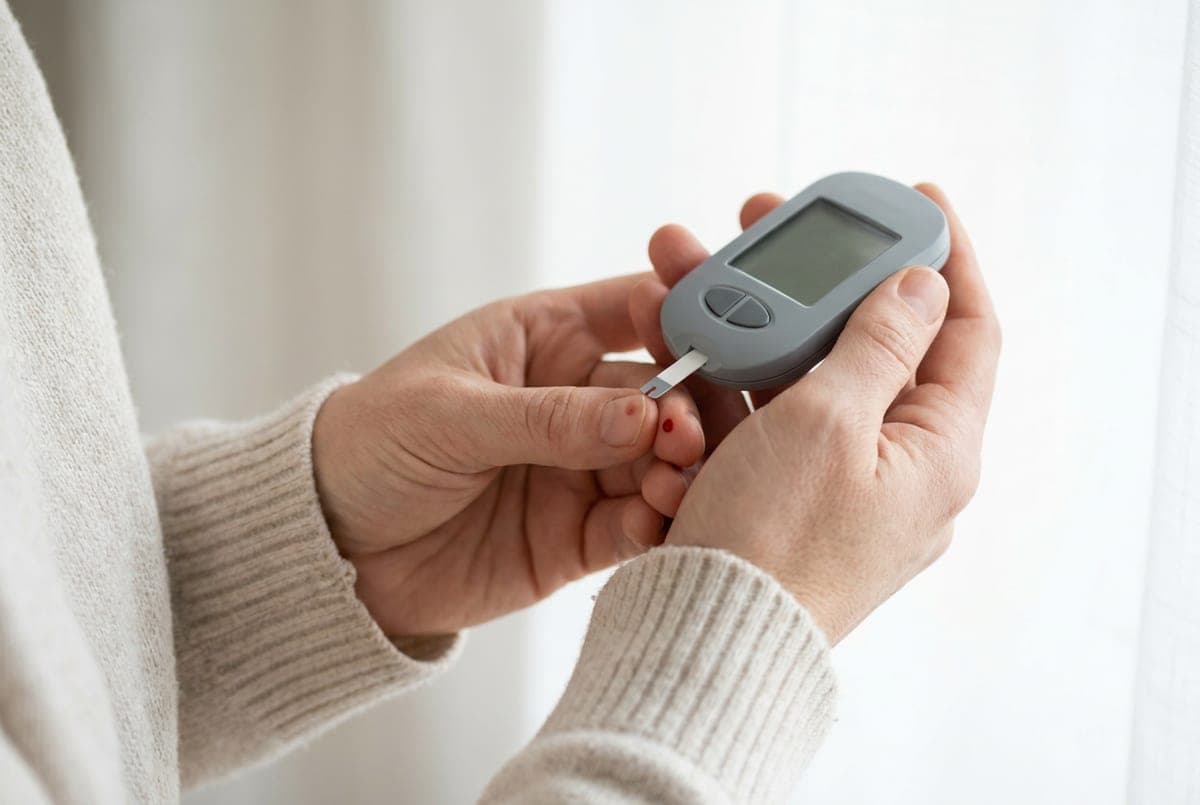
To use a glucometer: wash and dry your hands, insert a fresh test strip, prick the side of a fingertip, apply a full drop of blood to the strip, and read the result in about five seconds. Record the number, the time, and whether it was fasting or post-meal.
Testing your blood sugar at home is quick once you know the steps. Good technique is what makes the reading trustworthy.
Before you start
- Wash your hands in warm water and dry them completely.
- Check your test strips are in date and the vial has been kept sealed and cool.
- Have your meter, a fresh lancet, and your logbook ready.
Step by step
- Insert a test strip into the meter — it should switch on automatically.
- Load a fresh lancet into the lancing device and choose a depth setting.
- Prick the side of a fingertip. Warming the hand or gently milking the finger helps the drop form.
- Touch the drop to the strip's sample window and let it fill completely.
- Wait for the countdown — most meters show a result in about 5 seconds.
- Record the number, the time, and notes (fasting, post-meal, etc.). Dispose of the lancet safely.
Common mistakes to avoid
- Wet or unwashed hands — water dilutes the drop; food residue raises it.
- Too little blood — an under-filled strip can error or read low.
- Expired or heat-damaged strips — the single biggest cause of bad readings.
- Squeezing too hard — excessive squeezing mixes in tissue fluid and skews results.
An auto-coding meter like the GlucoDr Auto A removes one common error — manually entering the wrong code — and needs only a tiny 0.5 µL sample, which makes daily testing easier. For more on reliability, see why your readings vary.
This article is general health information, not medical advice. Target ranges are guides based on widely used standards (WHO, ADA, and Malaysian Clinical Practice Guidelines) and are individualised by your doctor. Always discuss your own results with a healthcare professional.
Frequently asked questions
Which finger is best for blood glucose testing?
Use the sides of your fingertips (not the centre or the thumb/index where you have most touch). Rotate fingers to avoid soreness.
Do I need to wash my hands before testing?
Yes — wash with warm water and dry thoroughly. Food residue (e.g. fruit) on fingers can falsely raise the reading; alcohol swabs must be fully dry first.
How much blood does a glucometer need?
Modern meters need only a tiny drop — the GlucoDr Auto A, for example, uses about 0.5 µL. Apply blood until the strip's window fills completely.