Inside Airdoc's Lancet study: AI that reads the retina in the real world
Medically reviewed by Pharmacist Cherlyn
The short answer
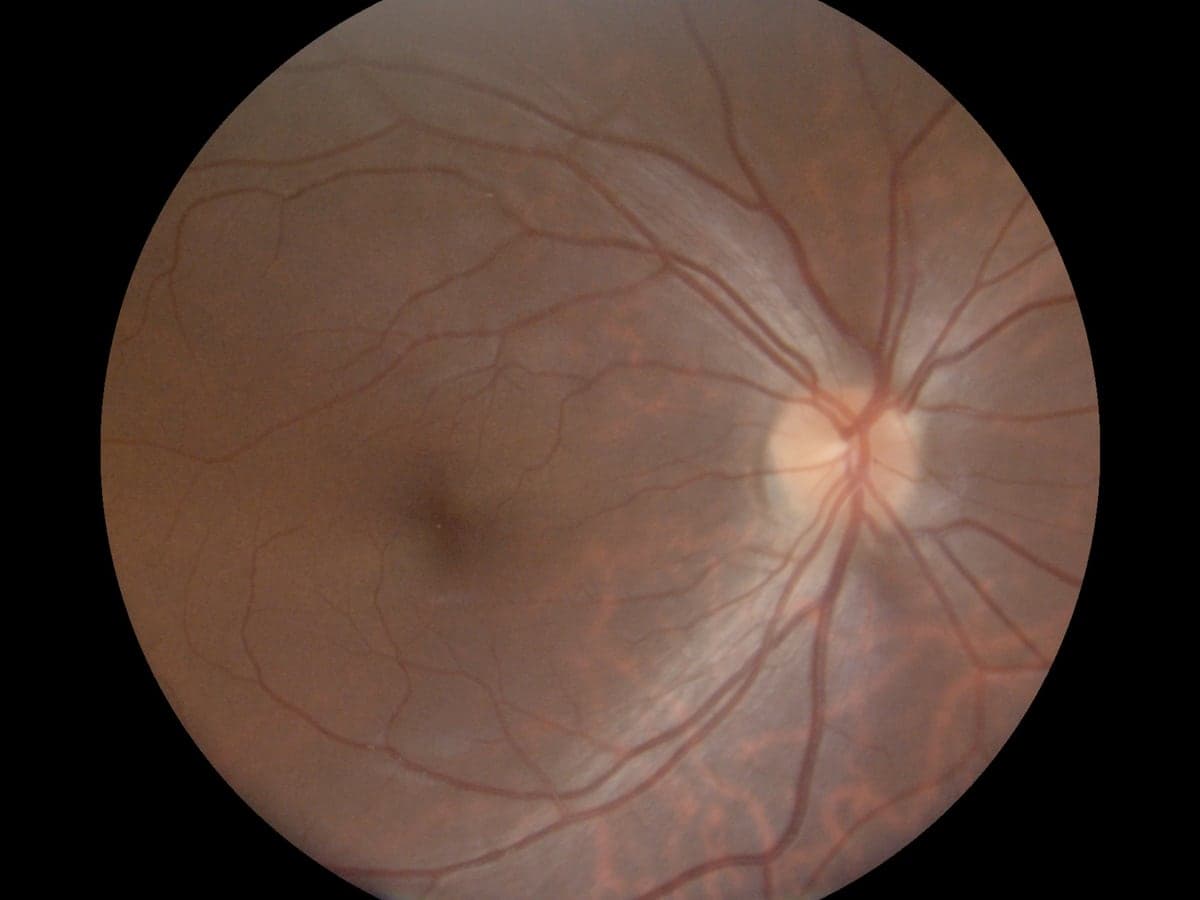
In a 2021 study in The Lancet Digital Health, Airdoc's CARE system — a single AI model — detected 14 common retinal conditions from one standard fundus photo. Trained on 207,228 images and tested on 18,136 photos prospectively collected from 35 real-world sites across China, it performed on par with ophthalmologists and held up across different ethnicities and camera types.
AI that reads eye scans is only as trustworthy as the evidence behind it. One of the most rigorous tests to date is Airdoc's CARE system, published in The Lancet Digital Health in 2021. Here's what it found, in plain language.
What the study tested
CARE (Comprehensive AI Retinal Expert) is a single deep-learning model that looks at one colour fundus photograph and identifies 14 common retinal conditions — plus a "normal" result. The 14 include two ocular signs of systemic disease — referable diabetic retinopathy and referable hypertensive retinopathy — and twelve vision-threatening conditions such as glaucomatous optic neuropathy, pathological myopia, retinal vein occlusion, retinal detachment, macular hole, macular oedema, and age-related macular degeneration signs (drusen, macular neovascularisation, geographic atrophy).
How big was it?
- Trained on 207,228 fundus photographs from 16 clinical settings.
- Externally tested on 18,136 photographs prospectively collected from 35 real-world sites across China — 8 tertiary hospitals, 6 community hospitals, and 21 health-screening (physical examination) centres.
- Further tested on non-Chinese patients and on a previously-unused camera type.
The results
Performance is reported as AUC (area under the curve), where 1.0 is perfect and 0.5 is a coin-toss. In real-world external testing CARE reached a mean AUC of about 0.965 in tertiary hospitals, 0.983 in community hospitals, and 0.953 at health-screening centres. Crucially, its accuracy was similar to that of ophthalmologists, and it held up (AUC ~0.960 for referable diabetic retinopathy) on a non-Chinese dataset — a sign the model generalises beyond the population it was trained on.
Why "real-world" is the important part
Many AI studies use clean, hand-picked images that flatter the algorithm. This study deliberately used photos prospectively gathered from the exact settings — community clinics and screening centres — where the tool would actually be used, often captured by non-specialist staff. CARE also runs at low computational cost (it can work on a laptop, offline), which makes screening feasible in remote areas with limited equipment.
The honest limits
The authors are clear-eyed about the caveats: CARE covers 14 conditions, so rarer or very subtle pathologies can be missed; accuracy dipped somewhat on an unfamiliar camera type; and it is a screening aid, not a diagnosis — in the study, final reports were always confirmed by ophthalmologists. Think of it as a fast, scalable first check that decides who needs a closer look.
Why it matters for you
This is oculomics in action: a quick, non-invasive retinal scan, read by validated AI, surfacing eye and systemic-disease signs early. It's the evidence base behind the Airdoc screening CityMedic brings to clinics and communities across Malaysia.
Source: Lin D, Xiong J, Liu C, et al. Application of Comprehensive Artificial intelligence Retinal Expert (CARE) system: a national real-world evidence study. The Lancet Digital Health 2021; 3(8): e486–e495. Read the open-access paper. This article is an educational summary, not medical advice.
Frequently asked questions
What is the Airdoc CARE system?
CARE (Comprehensive AI Retinal Expert) is a single deep-learning model that identifies 14 common retinal abnormalities — plus a normal result — from one colour fundus (retinal) photograph.
How accurate was it in the Lancet study?
In real-world external testing, CARE reached mean AUCs of about 0.965 in tertiary hospitals, 0.983 in community hospitals and 0.953 at physical-examination centres (an AUC of 1.0 is perfect). Its performance was similar to that of ophthalmologists.
Does the AI replace an eye doctor?
No. It is a screening aid that flags abnormalities quickly and at scale; diagnosis and treatment decisions still rest with qualified clinicians, and final reports in the study were confirmed by ophthalmologists.
Was it tested outside China?
Yes. CARE retained strong performance on a non-Chinese dataset (mostly Hispanic, plus Black, White and Asian patients), and on images from a previously-unused camera type.