
Point-of-care cholesterol testing: how accurate is a finger-prick lipid test?
Medically reviewed by Pharmacist Cherlyn
The short answer
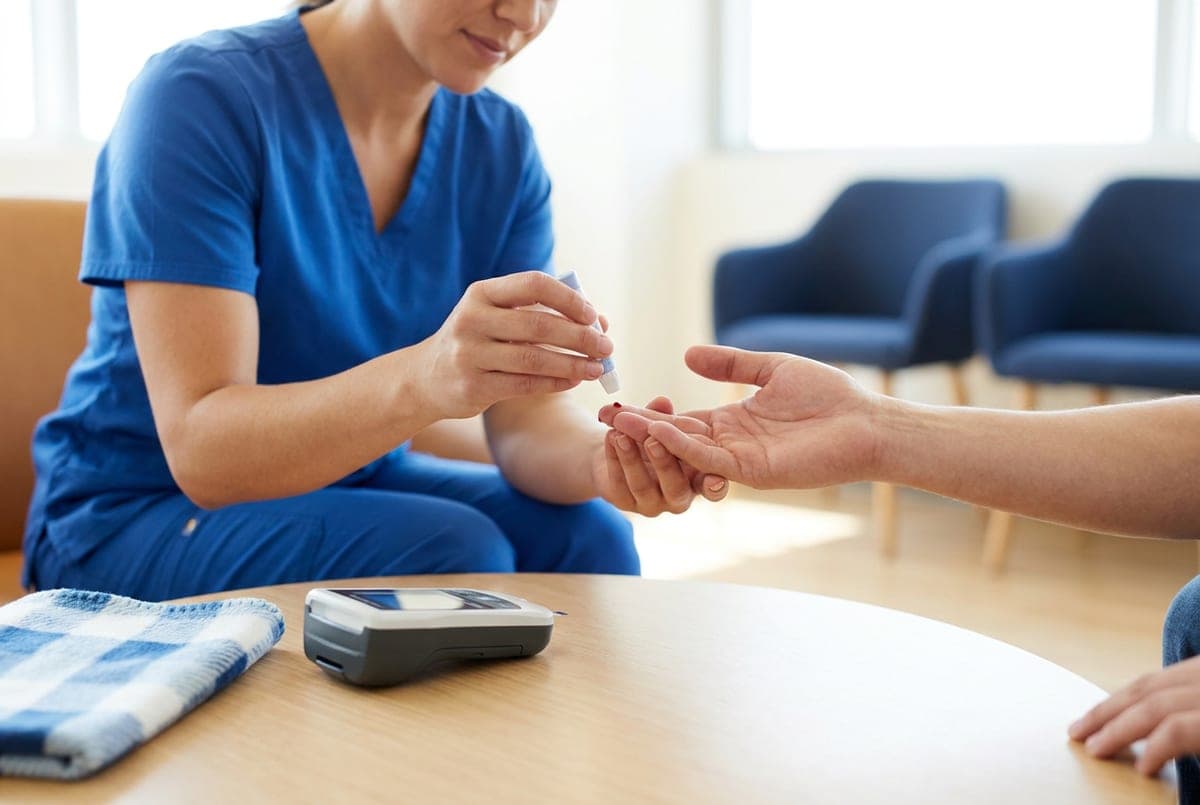
Point-of-care cholesterol testing measures your full lipid panel from a finger-prick drop of blood in a few minutes — no lab visit, no waiting. Quality systems are validated against hospital laboratory analysers to international standards (ISO 15197 / CLSI), targeting agreement within ±10 mg/dL (or ±15% at higher levels). It's a reliable screening tool; diagnosis and treatment decisions still involve your doctor.
A cholesterol check used to mean a venous blood draw at a lab and a wait for results. Point-of-care (PoC) lipid testing changes that: a single finger-prick drop of blood gives your cholesterol numbers in a few minutes, right where you are. The natural question — and the one this guide answers — is: can you trust those results?
What a point-of-care lipid test measures
From one small whole-blood sample, a PoC analyser reports a full lipid panel: total cholesterol, HDL ("good") cholesterol, and triglycerides, then calculates LDL ("bad") cholesterol and the cholesterol ratios. (For what each number means, see understanding your cholesterol numbers.)
Do you need to fast?
For routine screening, most current guidelines accept a non-fasting lipid panel — convenient for walk-in checks. Fasting mainly matters when triglycerides are very high, or when your doctor specifically asks for it. Always follow your clinician's advice for your situation.
How accurate is it — really?
Accuracy isn't a marketing claim; it's something a device has to prove against a hospital laboratory analyser, following international standards. Two things are measured:
- Agreement with the lab (method comparison): results are compared head-to-head with a reference laboratory analyser. A widely used acceptance target (ISO 15197-style) is that readings fall within ±10 mg/dL of the lab at lower concentrations, or within ±15% at higher ones.
- Repeatability (precision): testing the same sample many times should give consistent results — a low coefficient of variation (CV), typically required to be under 5%.
A worked example — SD LipidoCare. SD Biosensor's validation of the SD LipidoCare system tested it against a Hitachi hospital laboratory analyser, following CLSI EP-A3 and ISO 15197, to the ±10 mg/dL / ±15% agreement target. Its precision testing (per EN 13612 / ISO 15197) showed a within-run CV of roughly 3–4% across total cholesterol, HDL, and triglycerides — comfortably inside the ≤5% bar. In plain terms: the finger-prick result tracks closely with what a lab would report.
When a lab test is still the right call
PoC testing is built for screening, monitoring, and accessibility — not to replace clinical judgement. If a result is abnormal, if triglycerides are very high, or if you're starting or adjusting cholesterol medication, your doctor may confirm with a formal laboratory panel and decide on treatment. Think of PoC as the fast, accessible first check that tells you whether a deeper look is needed.
Why it matters: catching it early
High cholesterol is silent — most people feel completely well. Making testing quick and walk-in (at a pharmacy, clinic, or community health screening) means more people actually get checked, and earlier. CityMedic distributes the SD LipidoCare lipid analyser in Malaysia for exactly this kind of accessible, lab-validated screening.
Know your numbers
Already have your results? Put them into our free cholesterol calculator to see your LDL, ratios, and an estimate of your heart-disease risk — then read what the numbers mean.
Accuracy figures are from SD Biosensor's SD LipidoCare validation reports (method comparison and precision), conducted against a hospital laboratory analyser per CLSI EP-A3, ISO 15197, and EN 13612. This article is general education, not medical advice — discuss your results with a healthcare professional.
Frequently asked questions
Are finger-prick cholesterol tests accurate?
Quality point-of-care analysers are validated against hospital laboratory machines to international standards (ISO 15197 / CLSI), with a typical accuracy target of agreeing within ±10 mg/dL (or ±15% at higher concentrations). When used correctly, results track closely with a lab.
Do I need to fast for a point-of-care cholesterol test?
For routine screening, a non-fasting lipid panel is acceptable in most current guidelines. Fasting is mainly advised when triglycerides are very high or your doctor specifically requests it — so follow their guidance.
Can a point-of-care test replace a lab test?
It's an excellent screening and monitoring tool, but diagnosis and treatment decisions — especially starting medication — are made by your doctor, who may confirm with a laboratory test where needed.
What does SD LipidoCare measure?
SD LipidoCare measures a full lipid panel — total cholesterol, HDL, and triglycerides — from a finger-prick drop of blood in minutes, and calculates LDL and cholesterol ratios from those values.